When you open Zhengdao’s China export-control regulation library, you are using a searchable index of selected instruments—not finishing a control determination. You locate a law, administrative regulation, or key announcement, then you still open the Chinese original and check status (in force, not yet in force, repealed, or suspended) for your date. Your row is a lead to verify; the English note is not the governing text. This page is orientation only, not legal advice.
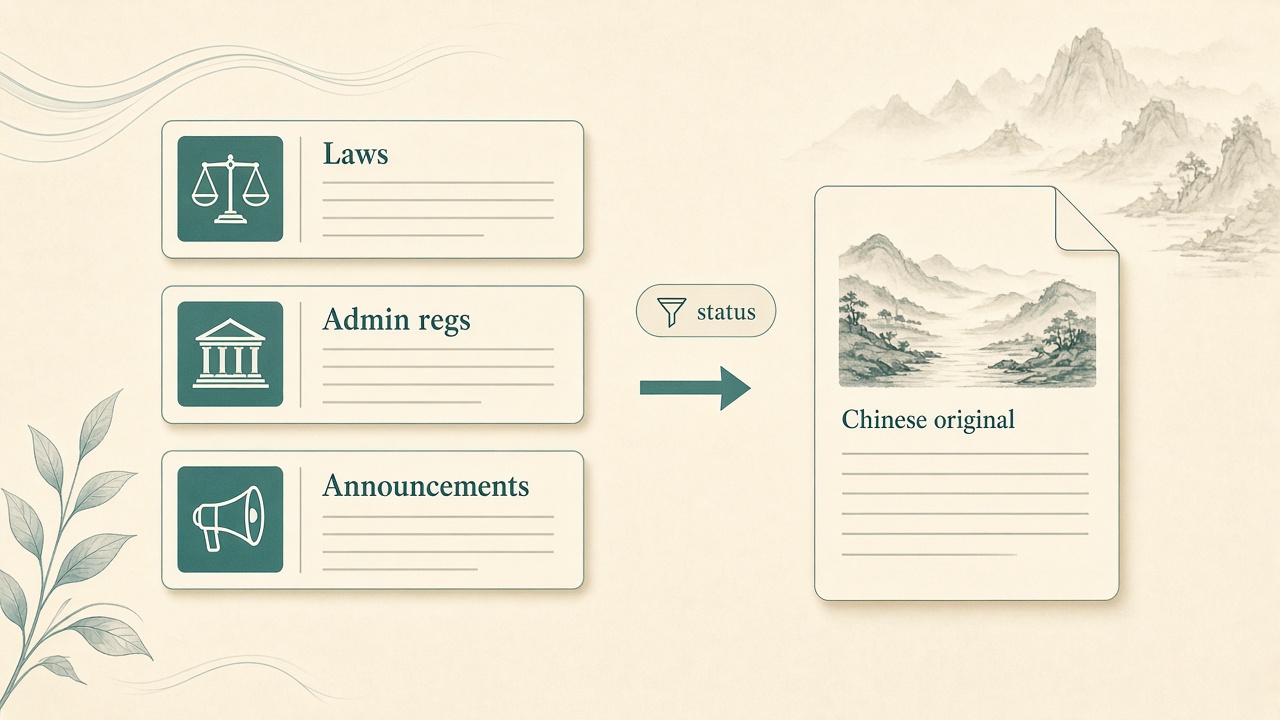
What the library organises (three buckets)
You use the library to find instruments Zhengdao has organised into three readable buckets. Laws are National People’s Congress instruments that set the high-level frame for trade and related controls. Administrative regulations are State Council instruments that implement and detail that frame for dual-use and related export-control regimes. Key announcements are a selected set of ministry notices and rules—often MOFCOM or joint instruments—that change lists, temporary measures, or operational detail faster than statutes do.
You should treat the hub’s disclosed counts as a snapshot of what the page currently indexes, not as a claim that every China export-control instrument nationwide is present. On the live library page, Zhengdao discloses 12 Laws, 10 Administrative regulations, and 32 Key announcements, and the filter UI can show 54 of 54 entries when no filter is applied. Those numbers move when the page is updated; you re-check the live hub instead of memorising a draft-day figure as permanent coverage.
Why status beats publication date
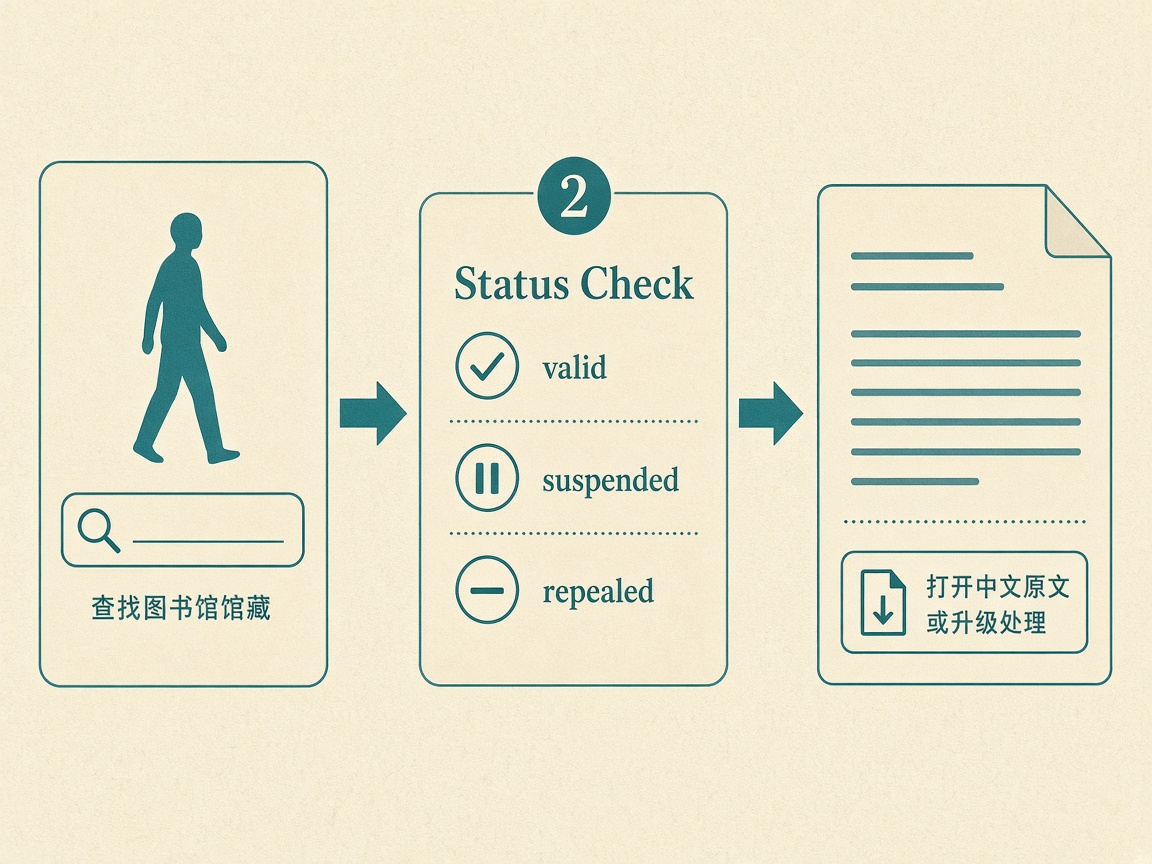
You filter and read status before you cite a title in any internal note. An instrument can be valid, not yet in force, repealed, or suspended—even when its publication date looks recent or familiar. Citing a repealed or suspended rule is one of the failure modes the library itself warns about: export-control texts are scattered and change fast, so a title match without a status check is incomplete.
You also keep the hub’s verification dates in view. The library separates page-content update time from official-source verification coverage. At draft time the live page showed content updated on 2026-09-15 (UTC+8) and official sources verified through 2026-09-01. Those stamps tell you how fresh Zhengdao’s editorial pass is; they do not replace your own check of the Chinese original’s commencement, amendment, repeal, or suspension language for the date that matters to your case.
How you should search and open the Chinese original
You search titles, notes, dates, or status strings, and you narrow by theme when you already know the question sits in dual-use, countermeasures, customs, technology export, or another theme the hub exposes. You prefer the instrument that matches your question’s legal layer: a framework question usually starts in laws or administrative regulations; a list change or temporary measure often starts in key announcements.
You then open the Chinese original / 中文原文 path the row provides. The English hub states plainly that it does not invent English statute pages; instrument titles open the Chinese record so you can verify the authoritative text. You compare the complete title, document number, effective language, and any suspension or repeal note with your facts—then you record what remains open instead of treating the English note column as enough.
What the English hub does not invent
You must not read an English title, theme tag, or one-line note as a full English statute. Zhengdao’s editorial policy puts official text first and keeps claim-level sourcing tied to primary documents from NPC, State Council, MOFCOM, or other issuing authorities. Your job on this page is location and status humility: find the row, check status, open Chinese original, then escalate when your transaction needs a judgment these tools cannot give.
You likewise remember that a library miss does not prove “no rule exists.” The hub is a curated, status-aware selection—not a claim of completeness across every ministry website. When your search is empty, you widen the query, try Chinese keywords if you have them, check adjacent theme filters, and still verify on official publication channels such as China’s Export Control Information Network when your case requires the primary public source.
Library vs map vs catalog (pick the right tool)
You use the regulation library when your question is “which instrument governs / is this text still in force?” You use the regulations map when you need relationship context—authorisation, implementation, repeal, and suspension drawn as a graph—and you already have How to Read China’s Dual-Use Regulations Map (and Find the Governing Text) for that path. You use the import–export control catalog when your question is about a product or technology measure row rather than a statute title—then you open Does your product or technology appear in a China import/export-control catalogue? and still treat every hit as a lead.
If you still need the company baseline—what dual-use means and why lists change—read Dual-Use Export Controls in China: the Baseline Every Company Needs once, then return here for library method. Keep Editorial and regulatory verification policy open when you need Zhengdao’s sourcing and “not legal advice” boundary in one place.
Open the regulation library—then verify the Chinese original
When you are ready to search by title, theme, or status—and to open the Chinese original before you rely on any row—open China Export-Control Regulation Library and keep status ahead of publication date. You are using Zhengdao to locate instruments faster, not to invent an English statute or a transaction opinion. Orient on the hub, verify the Chinese text, then escalate when your case needs a judgment these tools cannot give.