When you open Zhengdao’s China import–export control catalog, you are using a fast search index of official measures—not finishing a control determination. You locate candidate entries by name, HS digits, CAS or control code, then you still open the governing announcement or list text. Your match is a lead to verify; your miss does not prove the item is uncontrolled. This page is orientation only, not legal advice.
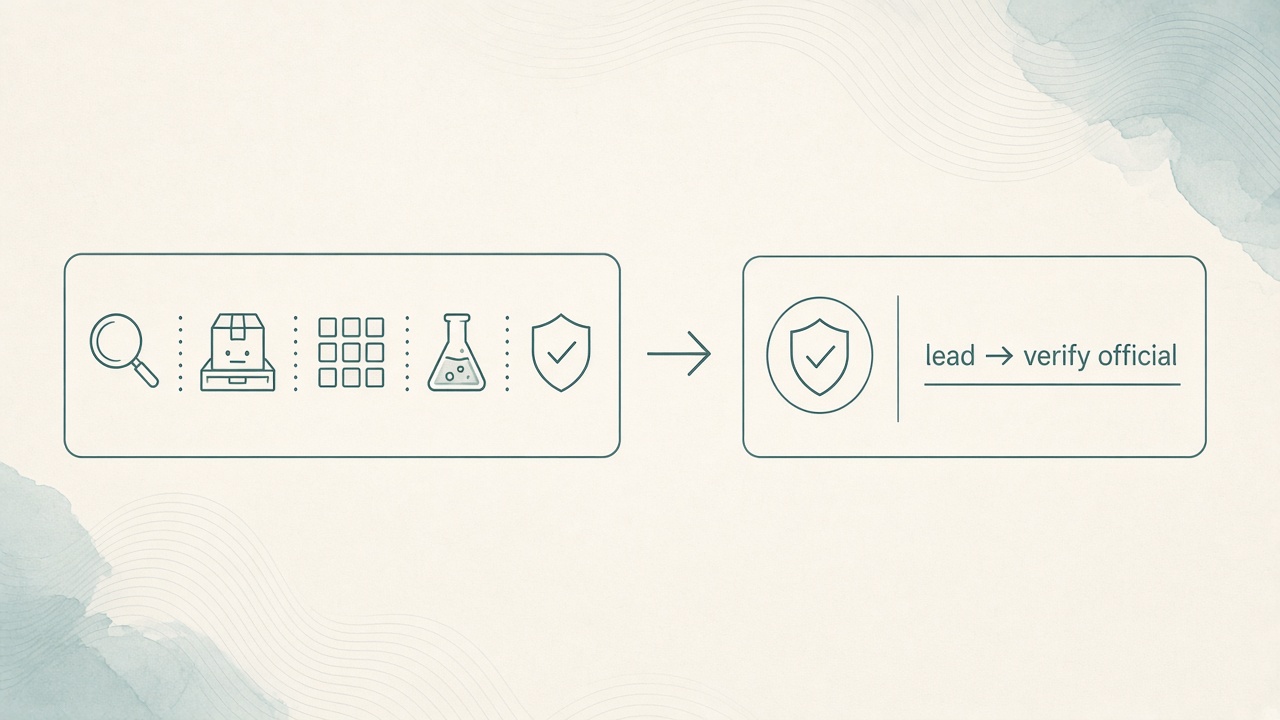
What the catalog indexes (and what it leaves to entity lists)
You use the catalog to search measures indexed by the product or technology itself—annual dual-use and related licence catalogues, import-licence goods rows, destination-specific requirements, prohibited or restricted technologies, and selected current temporary or trade measures that Zhengdao has structured from MOFCOM, GACC and MOST sources. You are not asking the page to decide your shipment; you are asking whether an official row or announcement may be relevant enough to open next.
You keep entity-specific measures in a different lane. Party screening and named counterparty measures belong in Paste a name or email domain. Find the party behind it., and the catalog page does not double-count those entity instruments as product hits. Your product search and your party search stay separate evidence trails even when one transaction needs both.
How you should search
You search with the facts you already trust: an English or Chinese product or technology name, a CAS number, a complete control or technology code, or the first 4–6 HS digits when you only have a customs family. You prefer the official Chinese item name when you have it, because product names on the catalogue side are authoritative in Chinese. You avoid treating a marketing label alone as enough description for a defensible screen.
You also choose filters by control type when you already know the question is import-licence goods, dual-use export control, destination-specific precursor chemicals, destination drone-related measures, technology restrictions, or a temporary ban. You still treat every filtered hit as incomplete until you read the official item description, notes and the version effective on your transaction date.
What a match proves—and what you must still verify
You should treat a catalog match as a lead, not a finished “controlled / licence required” answer for your exact SKU. Zhengdao’s own catalog safety line states the same boundary: a match means verify against the official text; the tool is for quick location only. You open the linked announcement or catalogue entry, compare the complete item name and description, technical parameters, exclusions and destination scope with your real goods or technology facts, then record what remains open.
You also keep official catalogue humility in view. MOFCOM and GACC Announcement No. 91 of 2025 published the 2026 Catalogue of Dual-Use Items and Technologies Subject to Import and Export Licence Administration, effective 1 January 2026 and replacing Announcement No. 67 of 2024. The catalogue’s own notes require dual-use import/export licensing for listed items and technologies whether or not a customs commodity number is shown, and they state that when names or descriptions conflict with the governing laws, regulations, the Dual-Use Item Export Control List or related announcements, those higher instruments prevail. Your HS field on a result card is a navigation aid—not the determination basis.
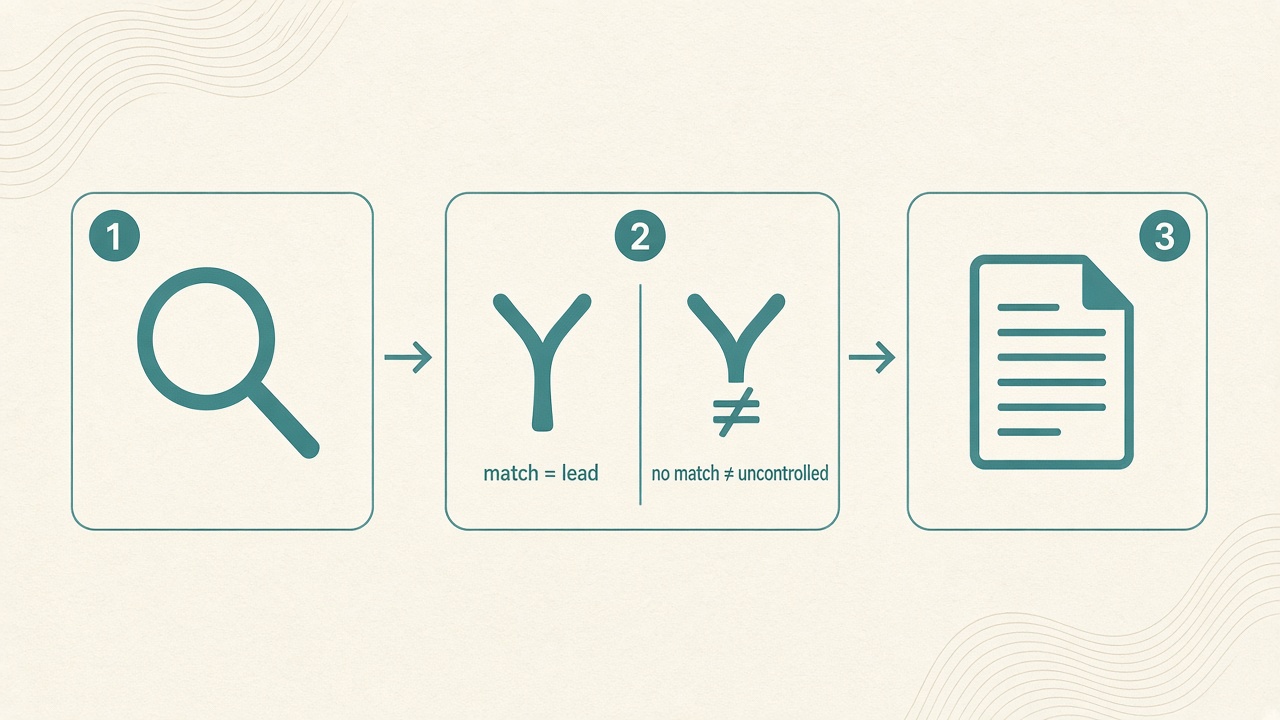
What “no match” does not prove
You must not read an empty result set as “uncontrolled,” “licence-free,” or “safe to ship.” The live catalog states plainly that no match ≠ uncontrolled. Your query may miss because you used a commercial synonym, truncated HS digits that never appear on the row, an English-only string while the authoritative name is Chinese, or because the English HTML search surface is only a reviewed subset of the full index.
You likewise remember that destination, end use, end user, temporary measures and catch-all style review can still matter after a miss. Official MOFCOM Q&A on customs commodity numbers likewise stresses that HS is not the basis for deciding dual-use status, and that licensing-catalogue items require licences in accordance with law whether or not an HS is listed. Your empty catalog screen is incomplete without official-text and facts review.
Import, export, technology and destination buckets (orientation only)
You orient the buckets at a high level so you do not mix questions. Import-licence rows help you locate goods that may need an import licence under the import side of the annual dual-use / related licence architecture—some categories apply only when goods are imported as used machinery or equipment, as the catalog page discloses. Export / dual-use export rows point you toward export-licence and Dual-Use Item Export Control List architecture for outbound goods and technologies. Technology buckets cover prohibited or restricted technology entries you must compare as technology, not as a finished goods HS alone. Specified-destination buckets apply only to the destination groups named in the measure—precursor-chemical destination rules and destination-specific drone-related dual-use measures are examples the live page indexes; they do not automatically travel to other destinations.
You do not invent sample rulings from a filter label. You use the bucket only to choose which official text to open first, then you verify scope against your route and transaction date.
English HTML subset vs the full dataset
You should read the coverage line on the live catalog before you over-trust an English-only miss. The page discloses that English HTML item pages are a reviewed subset of the full dataset, that crawlable English item URLs match that English count, and that client-side search on the English page is limited to that subset. The full JSON index shared with the Chinese catalogue is larger. Your workflow when English search looks thin is to widen the query, use Chinese names or codes when available, and still verify official sources—not to treat the subset boundary as a clean bill.
Adjacent literacy you should keep separate
If you still need the company baseline—what dual-use means and why lists change—read Dual-Use Export Controls in China: the Baseline Every Company Needs once, then return here for catalog method. If your confusion is specifically tariff HS versus dual-use control codes, read HS Codes vs Control Codes: When Tariff Lookup Is Not Enough once; that article teaches code systems, while this one teaches how to use the catalog product without over-reading a hit.
Search the catalog—then verify the official text
When you are ready to search by product, technology, HS, CAS or control code—and to treat every result as a lead—open Does your product or technology appear in a China import/export-control catalogue? and keep match humility beside you. You are using Zhengdao’s China import–export control catalog as an index, not as a ruling engine. Orient on the tool, verify the official text, then escalate when your case needs a judgment these pages cannot give.