
When you open Zhengdao’s partner teams page, you are reading a map of who handles legal work, not hiring anyone. The page says Zhengdao AI provides compliance information, training, and consulting, and introduces licensed attorneys from a partner network when a matter needs legal advice, administrative review, or litigation. A listed firm is not your counsel until you engage it separately. This page is not legal advice and not a control determination.
What the partner teams page is for
You use this page when your question has moved past general information and you need to know where legal work actually sits. The live heading is Professional teams we work with. The page lists one team today, run by Hiways Law Firm (Shanghai), and states a service boundary under it. You read the page to understand the handoff, not to collect an answer about your item, your counterparty, or your licence.
What the live page actually says
You can hold the page to what it prints. You do not add promises it does not make.
- Zhengdao’s own role. You read that Zhengdao AI provides compliance information, training, and consulting, and that it introduces licensed attorneys and professional teams when a matter requires legal advice, administrative review, or litigation.
- The team list. You read one entry: Hiways Law Firm (Shanghai), with a Cross-border Trade & ESG Compliance Team.
- Named areas on the card. You read export controls and economic sanctions; cross-border payments and bank inquiries; and anti-corruption, anti-money-laundering, and third-party compliance.
- Service boundary. You read that the listed teams are independently operated partner organisations, that Zhengdao AI does not provide legal advice, that initial contact goes through hi@zhengdao.ai, and that legal services are separately engaged with the relevant licensed provider.
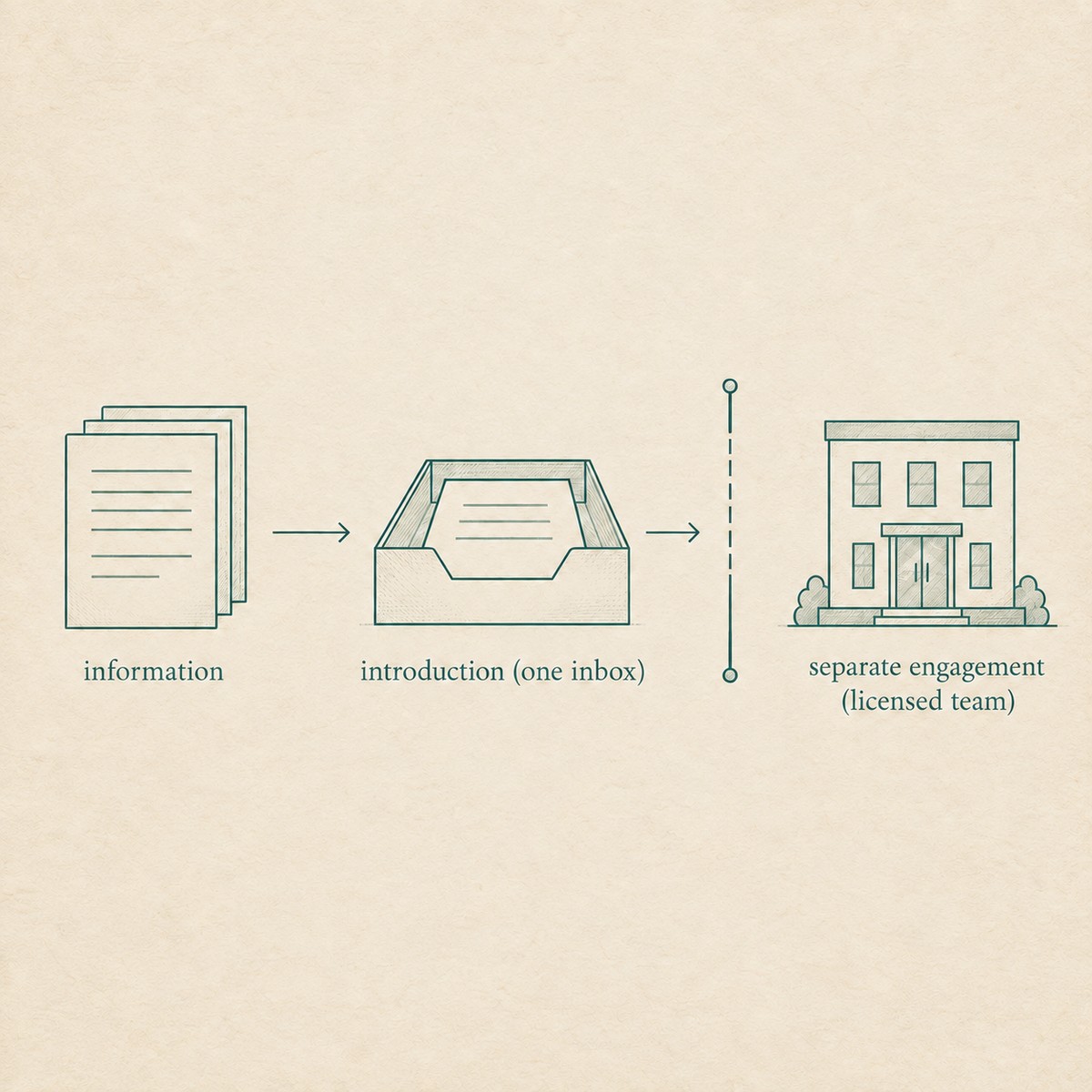
You stop there. The page names no fee, no response time for legal work, and no lawyer assigned to your file. A shared checklist follows the boundary and tells you to verify the complete official text and seek qualified advice when needed. You treat that checklist as a reminder, not as a review someone has already done for you.
Independent means separate, not a branch of Zhengdao
You read “independently operated partner organisations” as an identity statement. The firm is not a department of the website, and the website is not the firm. When you need a legal opinion, you are dealing with a licensed provider under its own terms, not with an article that happens to sit nearby.
Keep Disclaimer once beside this page. It says the operator is not a law firm, does not provide legal services, and that legal opinions, administrative reconsideration, and litigation representation are handled by cooperating licensed law firms under separate engagement. The team page and the disclaimer describe the same split from two sides, and neither one engages a lawyer for you.
An introduction is not an engagement
You read “initial contact is handled through hi@zhengdao.ai” as an intake route. Writing to that address starts a conversation. It does not sign an engagement letter, it does not open a legal file in your name, and it does not mean a lawyer has looked at your facts. The page says legal services are separately engaged, so you wait for that separate step before you treat anyone as your counsel.
Keep Contact us once for the mechanics. That page says it replies within two business days and asks you not to send identity documents or original licences in a first email. You describe the situation; you do not attach your whole file to an enquiry.
Reading the team profile without over-reading it
The team card links to a profile page. Keep Cross-border Trade & ESG Compliance Team once when you want the detail. It says Hiways Law Firm (Shanghai) runs the team, that Zhengdao AI can make the first introduction, and that licensed lawyers give all legal advice.
You can read the profile at three levels without stretching any of them.
- Practice areas. The profile lists six: export controls and economic sanctions; cross-border payments and bank inquiries; anti-corruption, anti-money-laundering, and third-party compliance; cross-border data flow compliance; sustainable supply chain and ESG risk response; and dispute resolution and crisis management. You read these as the areas the team says it covers, not as a finding that your matter belongs in any one of them.
- People. The profile lists five people with roles such as senior partner, attorney, and senior counsel, and describes them as working together from legal, finance, compliance, and enforcement backgrounds. It also prints a source note: the profile is based on 2026 practice materials, and you should confirm current members and firm roles before you rely on it. You follow that note.
- Selected experience. The profile describes anonymised matters and says they are provided for illustrative purposes only and do not represent a guarantee of similar outcomes. You read a case note as background, not as a forecast for your shipment.
“Can the deal move forward?” is a question, not an answer
The profile frames its work around questions like whether a deal can move ahead and what proof to keep. You read those headings as the scope of a future engagement. The page itself does not tell you that your deal can move forward, that your item is uncontrolled, or that a licence is unnecessary. Those conclusions need your facts, the current official text, and, where the matter calls for it, a licensed lawyer’s judgment.
The same profile says to pause when facts are missing, a list hit is unclear, ownership is hidden, a licence may be needed, or a bank asks questions. You read that as a signal to escalate, not as a method for working around a control.
What the partner teams page does not grant
You leave with the limits the page states, not with extras you wish it stated.
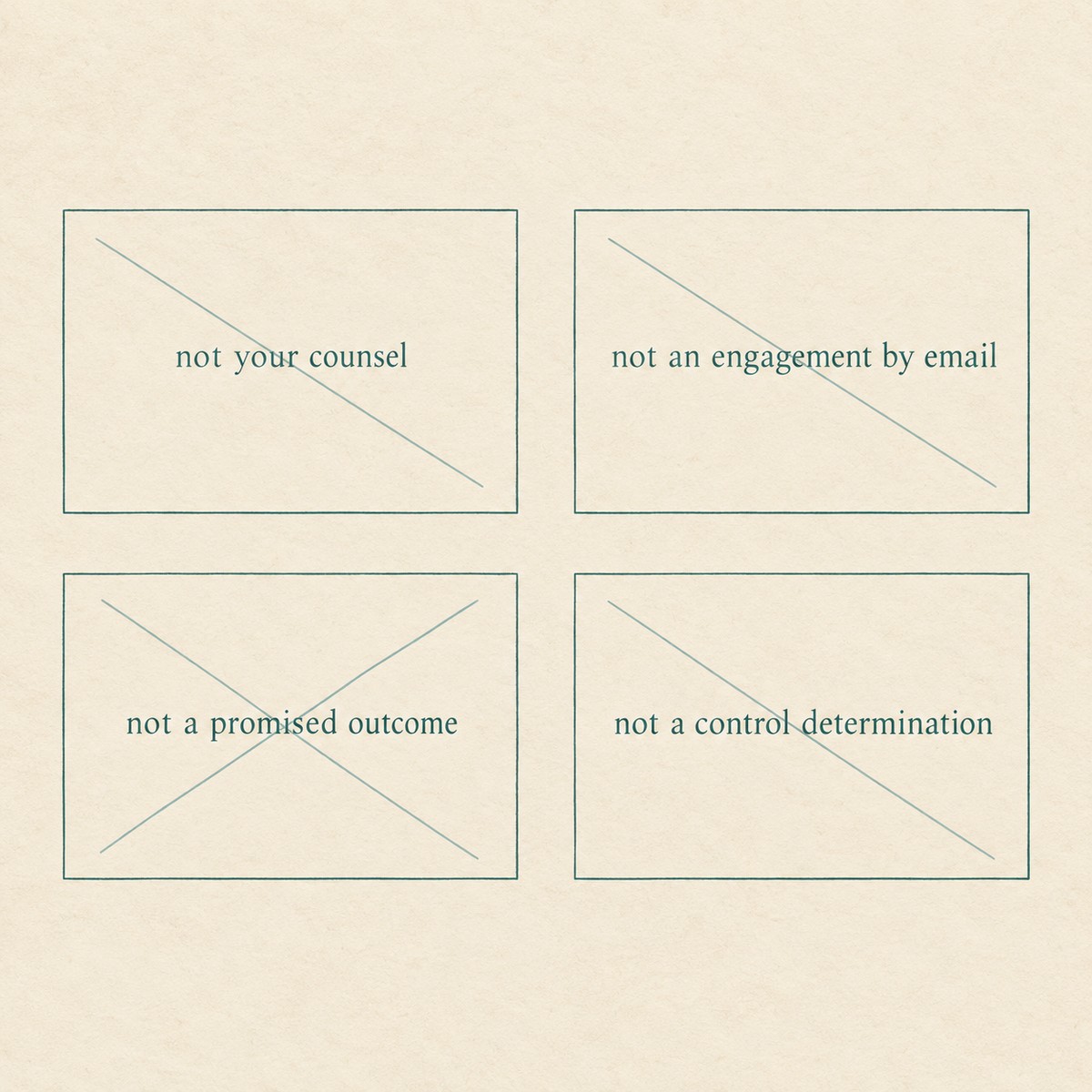
- Not your counsel. A firm on the list is not representing you until you engage it separately.
- Not legal advice. Zhengdao AI says it does not provide legal advice, and the page is no exception.
- Not an engagement by email. An enquiry to hi@zhengdao.ai is intake, not a retainer.
- Not a promised outcome. Anonymised cases are illustrative and carry no guarantee.
- Not a current roster you can cite. The profile asks you to confirm current members and roles.
- Not a control determination. Nothing on the page classifies your item or clears your counterparty.
Partner teams versus the disclaimer, About, and contact
You keep each surface in its lane. You open the team page to see who handles legal work and how the handoff works. You open the disclaimer for the site-wide boundary. You open About Zhengdao for who operates the site; it says nothing on the site constitutes legal advice. You open contact to start an enquiry. None of those pages is an engagement letter for you.