
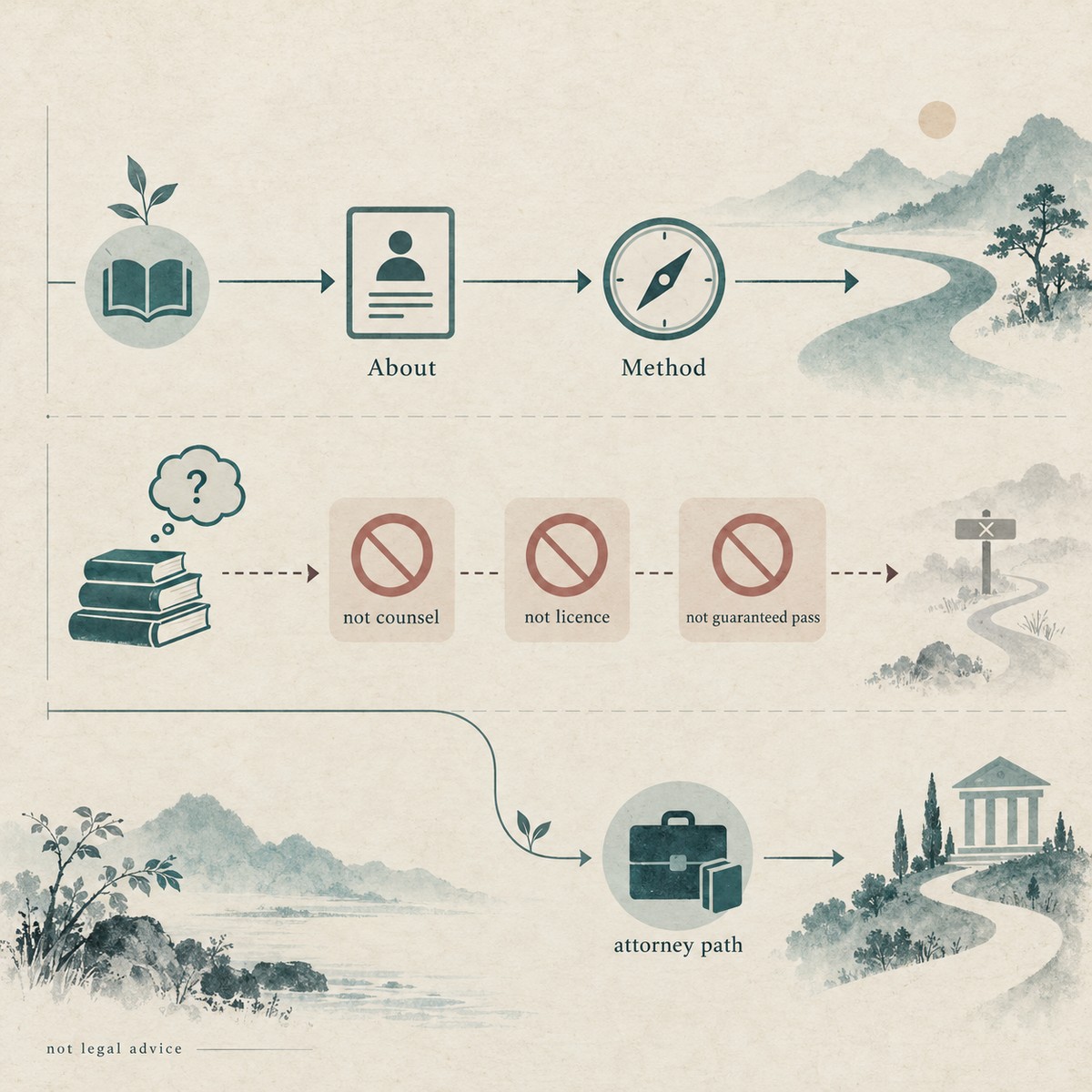
When you open Zhengdao’s About page, you are reading who operates the site and how the work is done—not collecting counsel or a licence. A sourced corpus and a published method are company and trust literacy. They are not legal advice, not a licence decision, and not a guaranteed pass. This guide shows you how to read About without mistaking process for outcome or information for a determination.
What Zhengdao is on the live About page
You read the live opening as a plain identity claim: Zhengdao.AI is a China trade-compliance information and consulting service. The same sentence says the work turns official rules into verifiable, usable company procedures. You treat that as a description of information and management support—not as a regulator appointment, not as a licence bureau, and not as a promise that every shipment will clear.
You keep the operator name beside the claim. The live page states that this website (zhengdao.ai) is operated by Zhengdao.AI. You do not invent a government seal, a MOFCOM franchise, or a guaranteed outcome the page does not offer. Incomplete truth about a live transaction is still incomplete; About does not fill that gap with certainty you cannot evidence.
Why “Zhengdao” / 正道
You read the “Why Zhengdao” section as an origin story for the brand, not as a compliance certificate. Live copy asks: “As a human being, what is the right thing to do?” Applied to import-export business, the answer on the page is plain: apply for the licences you should apply for, screen the customers you should screen, keep the records you should keep. No speculation, no luck, no back doors. “Zhengdao” (正道) means the right path.
You also read the failure mode the page names. Companies often did not “want to violate” the rules—they simply did not know the rules had changed: they cited a repealed regulation, missed that a product had entered a new control list, or left review to one salesperson’s gut feeling. What Zhengdao AI does, on the live page, is continuously translate shifting rules into actions a company can understand and actually take. You treat that translation job as literacy and procedure design—not as a stamp that finishes a licence file for you.
Method — four commitments you should not over-read
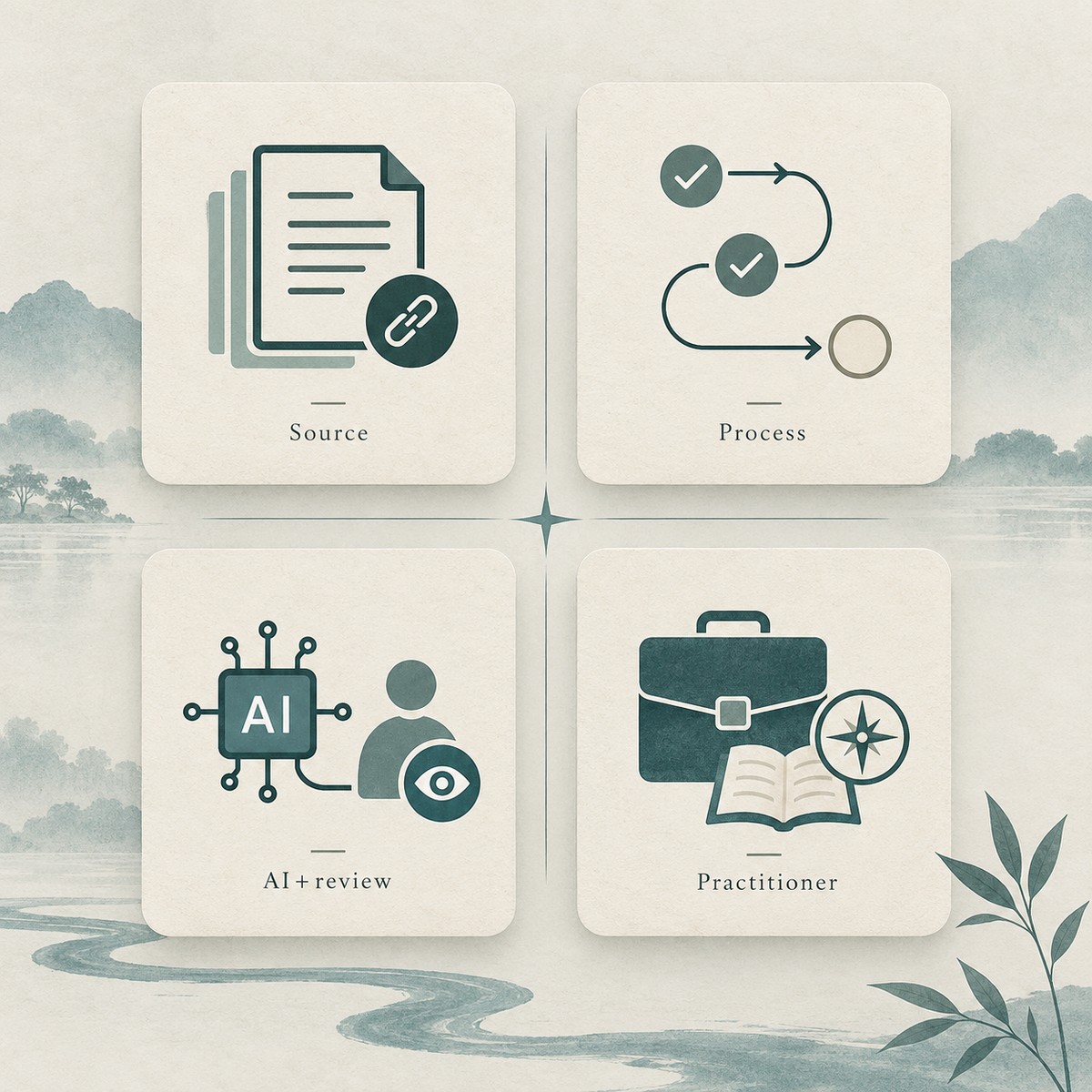
Live About language gives you four method commitments. You use them as reading rules for everything else on the site. You do not turn them into a clearance badge.
Every fact carries its source. Regulatory information is marked with its official origin and last-verified date; where something cannot be confirmed, the page says the practice is to write “not verified” rather than invent it. You treat a missing verification stamp as a pause signal—not as permission to invent the missing fact yourself.
Process, not outcome. There is no “guaranteed pass” in compliance. The page says Zhengdao helps you do the necessary work properly and makes no absolute claims. You keep that sentence beside every diligence form that asks for a “pass” you cannot honestly give.
AI for scale, humans for judgment. AI tracks regulatory changes and structures knowledge; every published piece is reviewed by a person. You do not treat an agent answer, a structured summary, or a fluent page as a licensed opinion. Scale is not judgment, and a human review of site content is not counsel for your transaction.
A practitioner’s view. The team has long served real manufacturing exporters—licence applications, customer screening, records and ledgers done in practice, not theory on paper. You read that as domain experience behind the method. You do not read it as a personal guarantee that your next shipment is cleared.
Division of labour with licensed attorneys
You escalate when the work needs a legal judgment. Live About language is clear: Zhengdao AI provides compliance information, training and management consulting; legal opinions, administrative reconsideration and litigation representation are handled by cooperating licensed law firms (foreign-trade and export-control focus), under separate engagement. The stated role is to help you clarify the problem and prepare materials before you meet the lawyer—which the page says meaningfully lowers legal-service cost.
Keep Professional teams we work with once when you need the partner-attorney surface, and Contact us once when you are ready to describe the real situation. You do not treat About’s method paragraph as counsel’s opinion. You do not paste “every fact carries its source” into a customer form as if a licensed attorney had signed your file.
What About does not grant
You finish the About page with the humility the live copy already states: nothing on this page or site constitutes legal advice. The page points you to the footer disclaimer and the full disclaimer. Keep Disclaimer once when you need that boundary surface, and Editorial and regulatory verification policy once when you need how verification and sourcing are supposed to work.
You refuse four over-reads every time:
- Not legal advice. Information, training and consulting are not counsel’s opinion for your facts.
- Not a licence. A sourced corpus and a published method are not a MOFCOM determination or a licence grant.
- Not a guaranteed pass. Process promises do not become outcome promises.
- Not an evasion kit. The site’s broader boundary—no help to evade export controls—stays beside About; a “right path” brand does not license shortcuts the page refuses.
You keep those refusals even when About’s practitioner language sounds confident. Confidence about method is still not clearance for your shipment.
About vs services vs editorial policy vs disclaimer
You keep the surfaces separate so one fluent page does not collapse into another.
You open About when you need company and trust literacy: who operates the site, why the name, how facts are sourced, how attorneys take over. That is the job of this article’s main CTA.
You open services when gaps already need structured delivery—training, ICP consulting, or a health assessment. Keep Put compliance requirements into every transaction once for that entry hub. You do not treat About as a substitute for choosing a service path, and you do not treat a service artefact as a licence (Ready services how-to exists separately—this page does not rewrite it).
You open editorial policy when you need the verification rules behind published regulatory text. You open disclaimer when you need the site-wide legal boundary restated in full. You do not use either page as a shortcut past counsel when your facts need a licensed judgment.